Gut-Brain Axis and Medical Nutritional Therapy
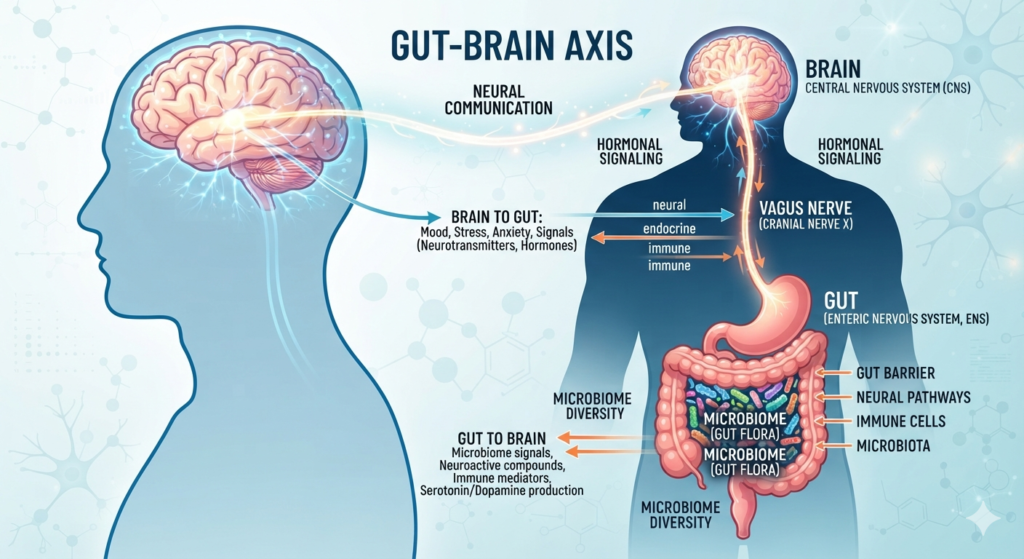
Immedietaly after birth, the human gut is colonized by a vast community of microbes. Recent research highlights that this microbiota is not just essential for digestion, but also palys a critical role in maintaining healthy brain function. There is a direct link between stress levels and gut bacteria, meaning changes in your microbiome can alter your stress related behaviours. In our gut there are good (lactobacillus acidophilus, bifidobacterium, faecalibacterium, akkermansia muciniphila, bifidobacterium infantis)and bad (clostridium difficile, helicobacter pylori, salmonella enterica, E.coli, campylobacter jejuni) bacteria, if we feed healthy food to our good bacteria it directly impacts our brain health and vice versa.
(vagus nerve is the longest nerve and most complex cranial nerve in the body, rather than the(sciatic nerve in your leg is technically the thickest). But in terms of gut brain communication, it is absolutely the primary highway. Gut microbial alterations, also known as dysbiosis, is a condition associated not only with gastrointestinal disorders but also with disease affecting other distal organs and also nervous system physiology and inflammation. Diets high in unhealthy foods promote the growth of pathogenic bacteria, which can alter this pathway and negatively impact mood .
Medical Nutritional therapy
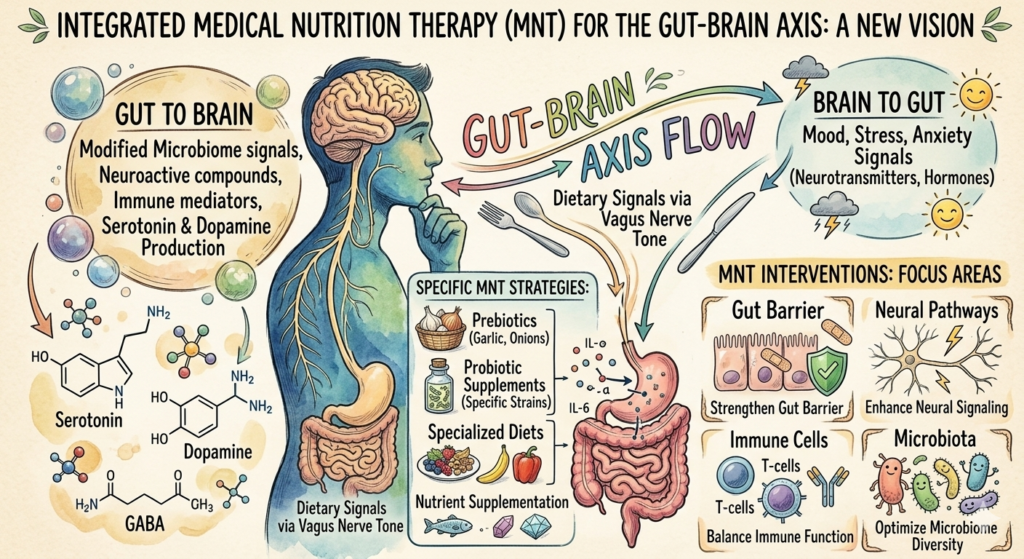
when we talk about medical nutritional therapy for gut brain axis, we are looking at how dietary interventions can modulate this communication. Because gut microbes produce nuerotransmetters , impact systemic inflammation, and directly talk to your brain via vagus nerve, what you eat has profound, scientifically proven effect on both your digestive health and on your cognitive or emotional state.
SHORT CHAIN FATTY ACIDS
gut microbiota ferments dietary fibers and produces SCFAs like acetate, propionate, and butyrate. Butyrate is a primary energy souce for colon cells, helps maintain the blood brain barrier and exhibits anti-inflammatory properties in the brain.
NEUROTRANSMITTER PRODUCTION
seretonin is produces approxiemetlly 90%, which regulates moos, sleep , and GI motility, is produced in the gut. its synthesis relies heavily on the essential amino acid tryptophan.
VAGUS NERVE STIMULATION AND INFLAMMATION CONTROL
chronic systemic inflammation can compromise the gut barrier( leaky gut), allowing pro - inflammatory cytokinase to cross into the bloodstream and signals the brain, potentially triggering mood distrubances or brain fog.anti inflammotary lipids help stablizes this barrier.
MICROBIOME FUEL
prebiotis helps to grow good bacteria in our gut. These are non-digestible food components that selectively stimulates the growth of beneficial bacteria. sources such as garlic, onions, aspargus, slightly underripe bananas rich in resistant starch.
probiotics and fermented foods such as unpasteurized kefir, yogurtwith live active cultures, kimchi.
NEUROTRANSMITTERS PRECURSORS
tryptophan rich foods sush as chicken, eggs, seeds pumpkin, sesame, and tofu. Tip: pair this with complex carbohydrates. polyphenol-rich foods like dark chocolate, green tea, olive oil, blueberries.
ANTI-INFLAMMATORY LIPIDS
Omega-3 fatty acids(EPA& DHA)